
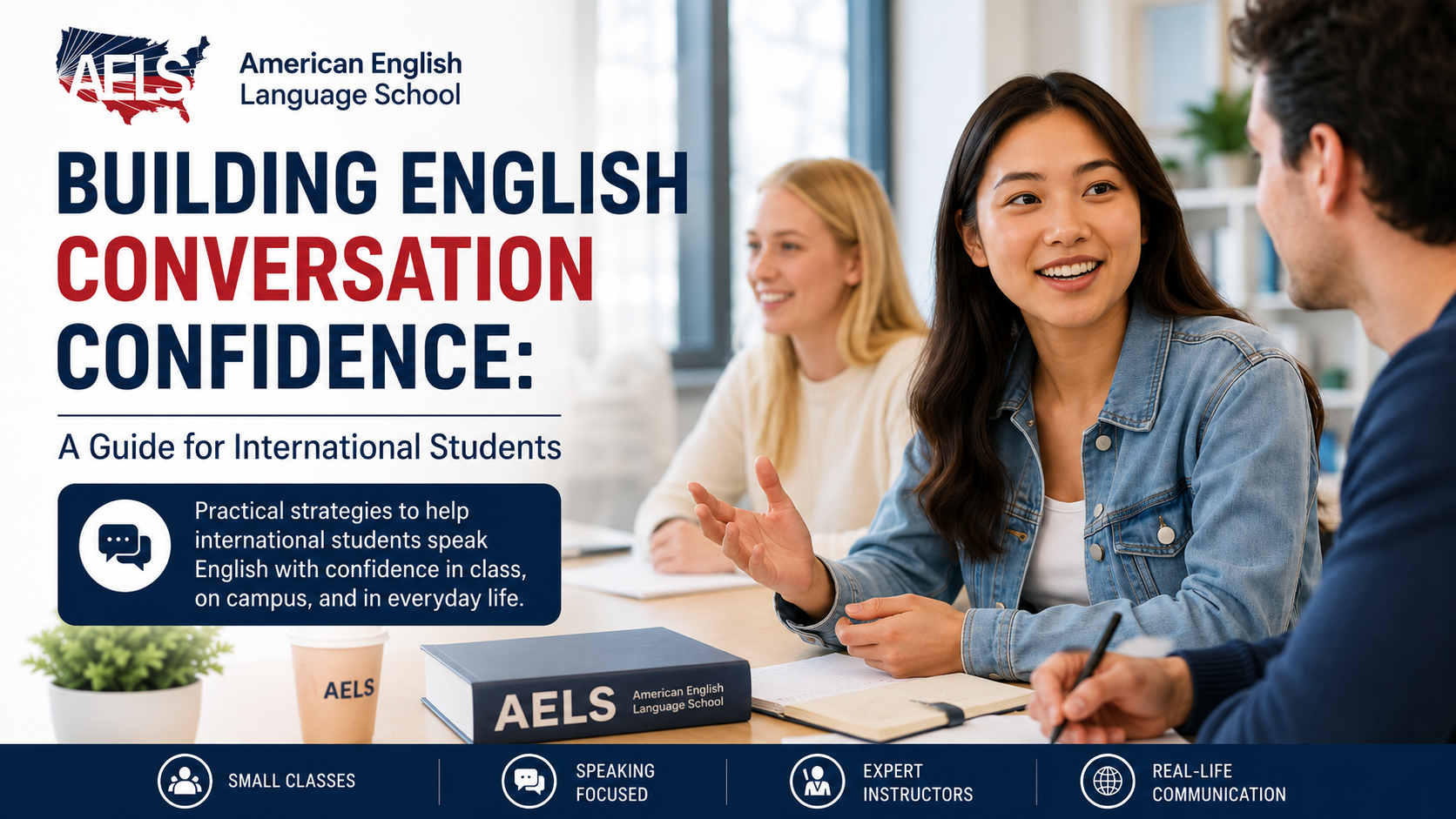
You have studied English for years. You can read academic articles, follow lectures, and write essays that earn strong grades. Then a classmate asks a casual question after class — and the words simply will not come.
If this sounds familiar, you are not alone, and you are not doing anything wrong.
Reading and writing give you time. You can pause, reread, revise, look up a word. Conversation gives you none of that. It happens in real time, moves in unpredictable directions, and often arrives with background noise and unfamiliar slang.
For international students there is an added pressure: the fear of being judged. Many students understand far more than they can produce, and that gap widens the more anxious they feel. This is well documented in second language research — anxiety raises what is called the "affective filter," which interferes with recall even when the knowledge is firmly there.
The encouraging part is that conversational fluency is a skill built through repetition in low-stakes settings. It is not a talent you either have or lack.
Lower the stakes before you raise them. Practice with one person before you practice with a group. A study partner, a tutor, or a small class is far more productive than forcing yourself into a large social setting where anxiety takes over.
Prepare your first thirty seconds. Most conversations open predictably: where you are from, what you study, how long you have been here. Rehearse those answers until they are automatic. Confidence early carries you through the unscripted parts.
Keep the conversation alive, not perfect. Phrases like "Sorry, could you say that again?" or "How do you say...?" are not failures. Fluent speakers use them constantly. They keep you in the conversation instead of ending it.
Shadow real speech. Choose a short clip of natural conversation, replay it, and speak along with it. This trains rhythm and intonation — the features that make speech sound natural — far more effectively than vocabulary lists.
Track effort, not perfection. Count the conversations you started this week, not the mistakes you made. Mistakes are evidence of practice.
At American English Language School, our classes are deliberately small. Speaking is not saved for the last ten minutes — it is built into every session. Students practice in pairs and small groups, receive direct feedback from instructors, and work through the situations they will actually face: asking a professor for clarification, opening a bank account, handling an interview, making small talk.
Our instructors work with international students every day and understand the specific pressures of studying in the United States. Whether you are preparing for academic coursework, adjusting to a new city, or simply want to feel at ease in everyday conversation, you will practice in an environment where mistakes are expected and corrected without judgment.
You do not need perfect grammar to have a real conversation. You need consistent, supported practice and a place where speaking feels safe. Every fluent speaker you admire was once exactly where you are now.
Learn more about our ESL programs at www.aels.edu or visit our AELS Los Angeles location on Google Maps to experience small-group English classes focused on conversation, confidence, and real-life communication.
Published on July 15, 2026
American English Language School (AELS) is a CEA-accredited and SEVP-approved English language school authorized to issue I-20 forms for international students. Located in Los Angeles, Orange County (Fullerton), and Irvine, California, AELS offers small classes, conversation-focused lessons, and proven results through individualized learning experiences. If you’re serious about improving your English, join AELS today!